
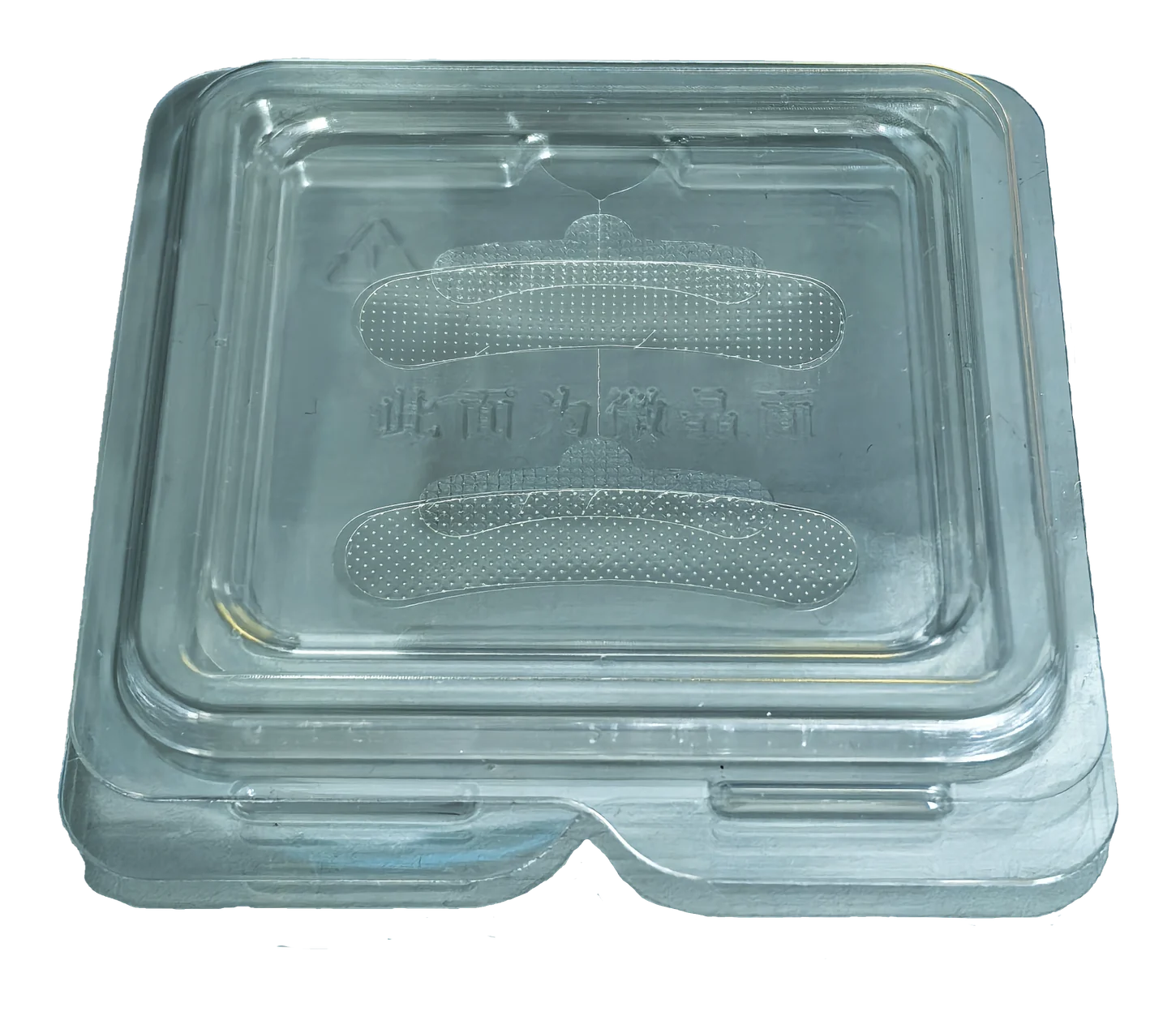
Map the role of the cover
Draw the tray base, seated patch, removable lid and any outer sachet. Mark where the cover is supported and which parts must remain clear of the patch. Ask whether the proposed lid is a mechanical cover or a sealed component included in the barrier assessment.
Check the highest feature
Place the proposed pair in its intended orientation and close the tray. Look for movement and contact marks after normal handling of the assembled sample. Inspect the curved tips as well as the central area. An empty tray can show closure fit while missing contact with a raised product.
Evaluate the first opening
Ask a reviewer to find the intended lifting point without a demonstration. Observe where the lid goes as it is removed and whether a patch follows it upward. Record how the cover is oriented in the sachet and the amount of clearance needed to grip it.
Frequently asked questions
Does a rigid lid remove the need for a sachet?
That depends on the roles assigned to each component. Have the supplier identify what protects the shape, what provides the specified environmental barrier and how the assembled pack will be reviewed.